
An article by Sydne Smith, RCC & MCPAT
Some of what people bring to therapy is hard to put into words. This is especially true of experiences that felt overwhelming when they happened.
A systematic review of art therapy for adults who had experienced trauma identified six controlled studies; in half of them, people who received art therapy showed a significant reduction in trauma symptoms (Schouten et al., 2015). The studies were small, and the authors called for more research. Even so, the finding is consistent with what many of us see in practice: when words do not reach far enough, another way in can gently open something that has felt stuck.
Talk therapy helps a great many people. It does not work equally well for everyone, or for every kind of experience. Having talked about something for a long time without much changing is a common and understandable reason people look for a different approach.
Why talking is sometimes not enough
Many clients arrive carrying the weight of experiences that once hurt them, patterns and wounds they have never had the chance to work through, or even to put into words. Often they have tried talking about these experiences before and found it only partly helpful. That does not mean they did anything wrong. It simply means the experience needed a different kind of space.
There are good reasons for this. Some experiences were never stored as a clear, verbal story. Trauma is frequently held as sensory, emotional, or procedural memory rather than as a coherent narrative (van der Kolk, 1994; King, 2021). Some material feels too overwhelming to approach head-on, so the mind steers away from it mid-sentence. And some people have spent years explaining themselves to others without feeling truly understood, which can make further talking feel like more of the same.
Art as a non-verbal language
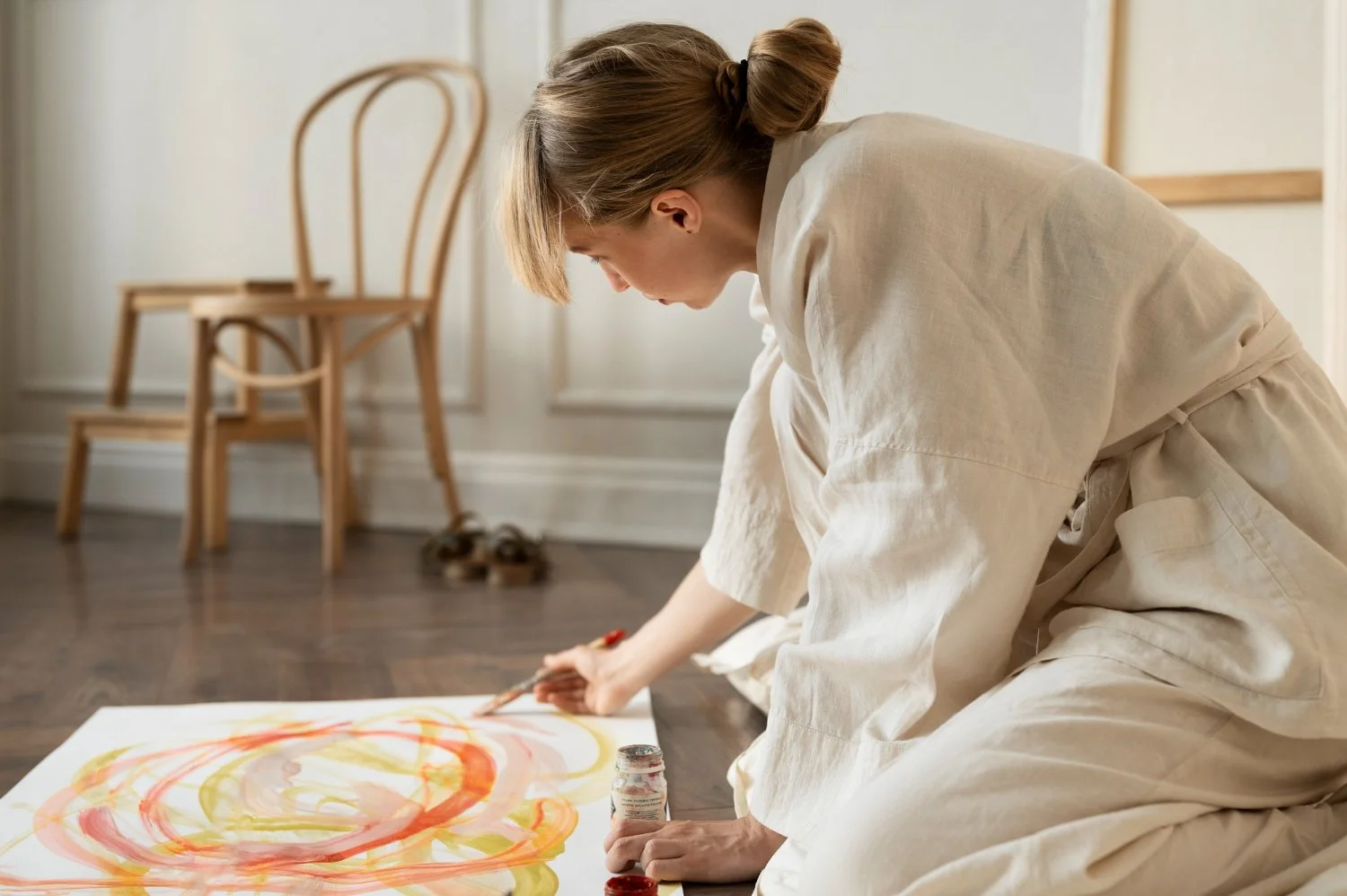
Art therapy offers a non-verbal language that can put form to overwhelming experiences in a way that often feels less threatening to the nervous system. The nervous system continuously scans for danger and can react before conscious thought has a chance to intervene. When something feels too much to say, it can sometimes be shown instead: as a colour, a shape, the pressure of a pencil, or an arrangement of images.
Making something also creates a little distance. The feeling is on the page rather than only inside the body, so it can be looked at, changed, or set aside. That externalization can make it possible to approach material that has felt unapproachable (Malchiodi, 2020; Rubin, 2016). Because art engages sensory and motor systems, it can also support regulation and offer a pathway to implicit memory that does not require immediate verbal processing (King, 2021; Magsamen & Ross, 2023).
What the research suggests
Research and clinical practice consistently show that art therapy offers a valuable pathway for people who have experienced trauma, particularly when verbal approaches alone have not been enough. A systematic review of controlled studies found that half of the included trials reported significant reductions in trauma symptoms for adults who received art therapy (Schouten et al., 2015).
A broader literature review of 20 studies identified clear benefits across multiple areas: reduced symptoms, support for processing traumatic memories, a more holistic sense of self, and increased well-being (Schnitzer et al., 2021). These findings align with what many clinicians observe: art therapy’s nonverbal, sensory nature can reach material that words struggle to touch.
Art making also appears to support the body’s capacity for regulation. In one study, 45 minutes of art making significantly lowered cortisol levels for most healthy adult participants, regardless of prior artistic experience (Kaimal et al., 2016). While that study looked at art making rather than formal therapy, it points to a physiological calming effect that can create a safer foundation for therapeutic work.
Leaders in the field note that art therapy’s engagement of sensory and motor systems, combined with the externalization of experience onto the page, helps clients approach implicit, body-based memories without requiring immediate verbal narrative (King, 2021; Malchiodi, 2020). This makes it especially useful for experiences that were never stored as clear stories or that feel too overwhelming to describe.
If you are not sure art therapy is for you
It is completely normal to feel unsure about art therapy if you have never tried it. Many people arrive with that hesitation, and it is a reasonable place to begin. You do not need any artistic skill or experience, and nothing you create is judged or evaluated.
In sessions with me, art is always an invitation, never a requirement. We talk, as in any counselling, and creative work comes in where it feels helpful and manageable. Some clients discover they want to use it regularly once they experience how it can ease something that has felt stuck and others occasionally. Either way, the process stays collaborative and paced by you. The aim is simply to offer another way of knowing yourself and making meaning of your experiences, especially when words have not been enough.
What can change
I have seen art therapy help people soften the walls they have built to protect themselves and reconnect with who they are. It is an approach I deeply believe in because it offers a different path to knowing yourself and making meaning of your experiences, especially when words fall short or do not reach deep enough.
Conversation and making weave together in session, supporting each other; one often opens what the other could not reach on its own. The work stays paced by you. Over time, many people find they can express and understand more of what they carry, notice shifts in how they relate to themselves, and build a stronger sense of their own capacity and inner resources.
Common questions about art therapy
Is art therapy better than talk therapy?
Neither is better for everyone. Art therapy still includes talking, and it can suit people who have found talking alone only partly helpful. Its research base is smaller than that of the most studied verbal therapies; however, the existing research is promising and still developing (Schouten et al., 2015).
Can art therapy help with trauma?
Early research is encouraging: a review of controlled studies found reduced trauma symptoms in half of them. Art therapy for trauma is usually paced carefully so that you are not pushed toward more than you can manage at a given moment (Schouten et al., 2015; Malchiodi, 2020).
What if making art feels embarrassing?
That is a common feeling, especially for adults who have not made art since school. Nothing is judged. You choose how much to use art, and many people find the self-consciousness fades once the focus shifts from how the image looks to what information becomes available through it.
Can art therapy be combined with other approaches?
Yes. It integrates readily with trauma-informed, person-centred counselling and can be combined with many therapeutic approaches, including mindfulness and practical cognitive or behavioural tools where those are helpful.
References
Kaimal, G., Ray, K., & Muniz, J. (2016). Reduction of cortisol levels and participants’ responses following art making. Art Therapy, 33(2), 74–80. https://doi.org/10.1080/07421656.2016.1166832
King, J. L. (Ed.). (2021). Art therapy, trauma, and neuroscience: Theoretical and practical perspectives. Routledge. https://www.routledge.com/Art-Therapy-Trauma-and-Neuroscience-Theoretical-and-Practical-Perspectives/King/p/book/9781032050539
Malchiodi, C. A. (2020). Trauma and expressive arts therapy: Brain, body, and imagination in the healing process. Guilford Press. https://www.guilford.com/books/Trauma-and-Expressive-Arts-Therapy/Cathy-Malchiodi/9781462543113?srsltid=AYCX9vLpGkS0sJwImGQR2gfZmzszNjJwdq8qsrQNsOeiS0eoEMUfABYD
Magsamen, S., & Ross, I. (2023). Your brain on art: How the arts transform us. Random House. https://www.penguinrandomhouse.ca/books/697351/your-brain-on-art-by-susan-magsamen-and-ivy-ross/9780593449240
Rubin, J. A. (2016). Approaches to art therapy: Theory and technique (3rd ed.). Routledge. https://www.routledge.com/Approaches-to-Art-Therapy-Theory-and-Technique/VanDenBerg-Rubin/p/book/9781138884564
Schnitzer, G., Holttum, S., & Huet, V. (2021). A systematic literature review of the impact of art therapy upon post-traumatic stress disorder. International Journal of Art Therapy, 26(4), 147–160. https://doi.org/10.1080/17454832.2021.1910719
Schouten, K. A., de Niet, G. J., Knipscheer, J. W., Kleber, R. J., & Hutschemaekers, G. J. M. (2015). The effectiveness of art therapy in the treatment of traumatized adults: A systematic review on art therapy and trauma. Trauma, Violence, & Abuse, 16(2), 220–228. https://doi.org/10.1177/1524838014555032
van der Kolk, B. A. (1994). The body keeps the score: Memory and the evolving psychobiology of posttraumatic stress. Harvard Review of Psychiatry, 1(5), 253–265. https://doi.org/10.3109/10673229409017088
About the author: Sydne Smith
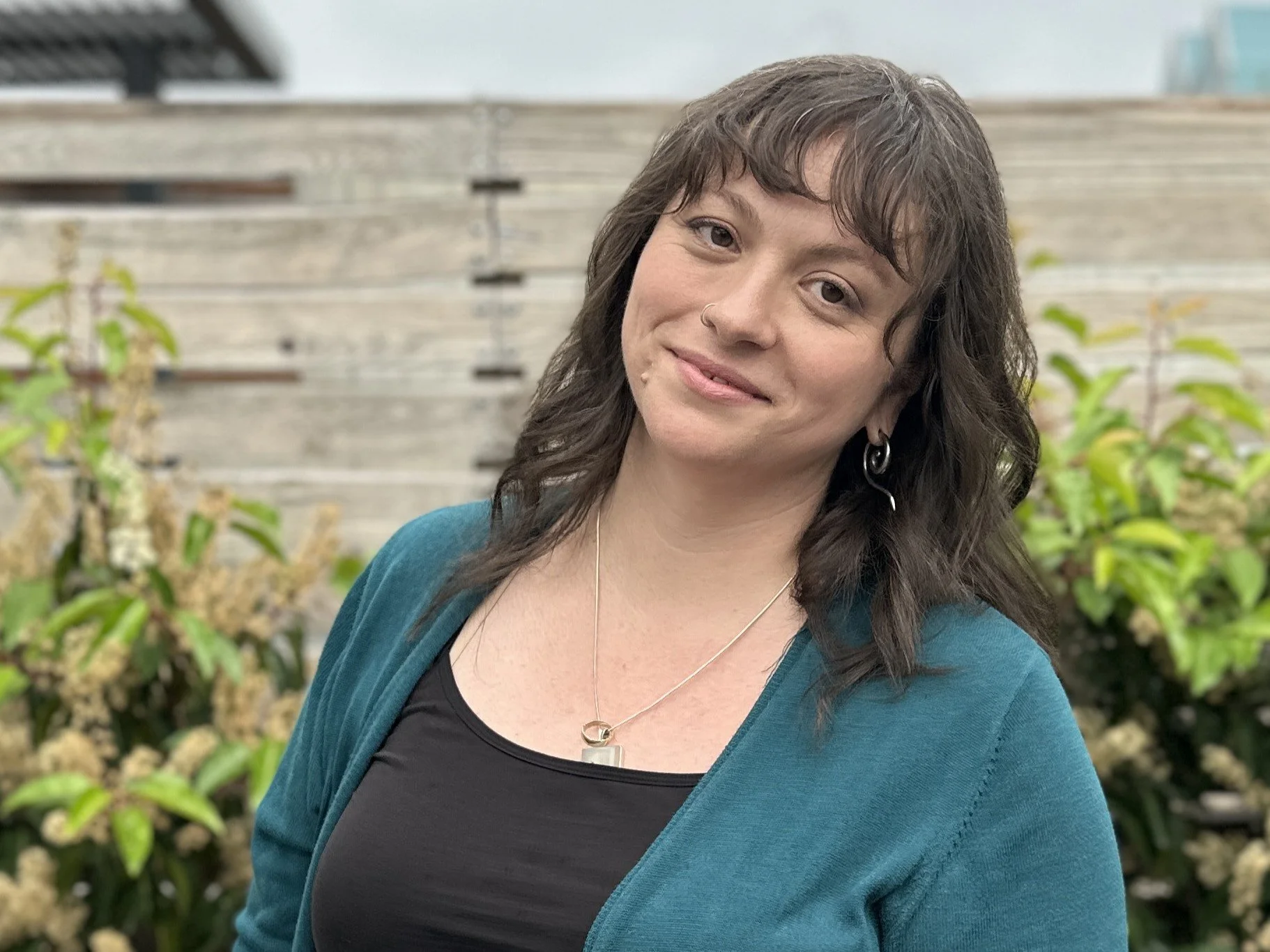
I’m Sydne Smith, a Registered Clinical Counsellor (RCC) and Professional Art Therapist (Canadian Art Therapy Association) based in Vancouver and Burnaby, BC. I am an associate at the Burnaby Therapy Collective as well as my private practice The Spiral Path.
I specialize in supporting adults through complex trauma, the effects of psychologically abusive relationships, grief and loss, life transitions, anxiety, low self-worth, and ADHD.
I offer in-person sessions at the Vancouver Therapy Collective in Kitsilano and at the Burnaby Therapy Collective near Metrotown, as well as virtual sessions across British Columbia. A free 20-minute consultation is available so you can ask questions and see whether we are a good fit.
You deserve warmth, understanding, and skilled support on your path toward healing.
